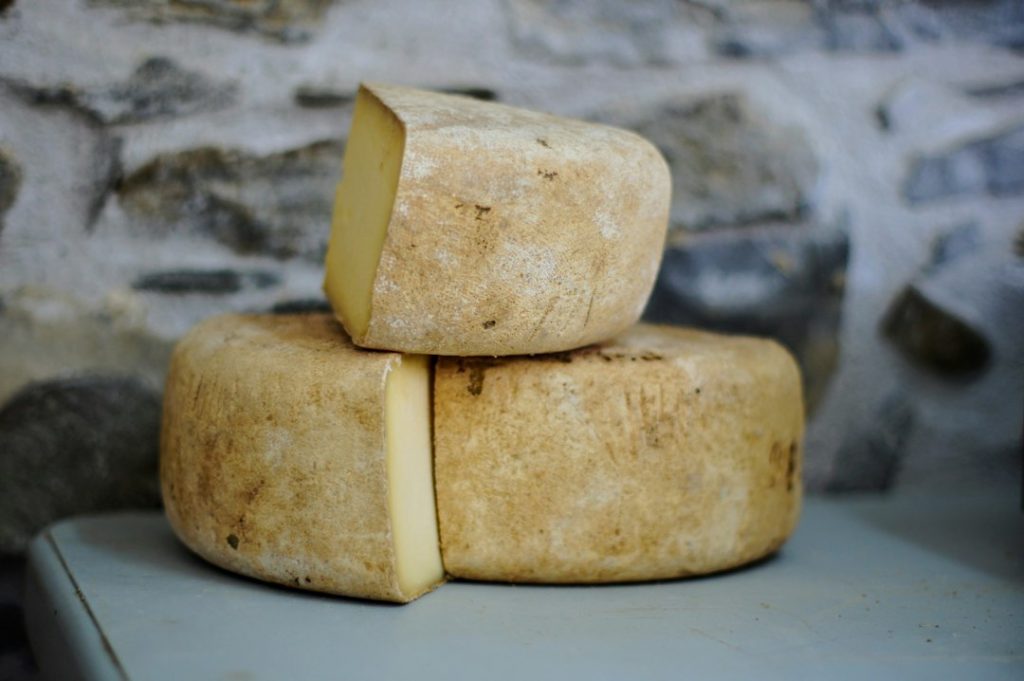
Walk into any good food shop in Cork, Galway, or Dublin today and you’ll find a cheese counter that looks more like a gallery: wheels of golden Gubbeen, creamy rounds of Ardrahan, blue-veined wedges of Cashel Blue, and ash-rolled logs of St. Tola goat cheese. This is Ireland’s farmhouse cheese revolution, and it’s been quietly building for four decades.
What started in the 1970s with a handful of pioneers has grown into one of Europe’s most exciting cheese scenes. Today, more than 60 artisan cheesemakers are working across Ireland, turning milk from small herds into cheeses that win international awards and grace tables from Tokyo to New York.
Where It All Began
The story starts in West Cork in 1979, when Veronica Steele began making Milleens—a washed-rind cheese with a pungent aroma and buttery texture—on her farm near Beara Peninsula. She wasn’t trying to start a movement. She just wanted to make use of excess milk and create something her family in Switzerland would recognize.
Around the same time, Jeffa Gill started making Durrus, another washed-rind beauty, a few miles away in Coomkeen. These two women, working independently on rocky farms overlooking the Atlantic, became the mothers of modern Irish cheese. Their cheeses didn’t taste like anything Ireland had made before—they were bold, complex, alive.
Within a decade, others followed. Giana Ferguson and her late husband Norman launched Gubbeen in Schull. The Grubb family created Cashel Blue in Tipperary. Mary Burns developed Ardrahan in County Cork. What they shared was a commitment to raw or minimally pasteurized milk, traditional methods, and a willingness to let terroir—the land, climate, and pasture—shape the flavor.
What Makes Irish Farmhouse Cheese Different
Ireland’s climate is a cheesemaker’s secret weapon. The Gulf Stream keeps the island green year-round, and cows graze on grass for eight to ten months annually. That grass-fed milk is richer in omega-3s, beta-carotene, and flavor compounds than milk from grain-fed herds. You can taste it—there’s a sweetness, a floral quality, that comes straight from the pasture.
Most of Ireland’s best cheeses are made by hand in small batches. At Coolea Farmhouse Cheese in County Cork, the Willems family still makes Gouda-style wheels using a recipe brought from Holland in 1979. Each 20-pound wheel is turned, washed, and aged for months in a temperature-controlled cave. The result is a nutty, caramel-noted cheese that’s nothing like mass-market Gouda.
St. Tola, made by Siobhán Ní Ghairbhith in County Clare, is a goat cheese log rolled in ash and aged just long enough to develop a creamy center and a slight tang. It’s served in some of Ireland’s top restaurants and exported to France—a country not known for importing cheese from anyone.
Where to Taste the Best
The Sheridans Cheesemongers shops in Dublin, Galway, and Meath are the gold standard for Irish cheese. The staff know every maker personally and can guide you through a tasting that spans the island. Expect to pay around $8 to $15 per wedge, depending on age and rarity.
In Cork, the English Market has multiple stalls selling farmhouse cheese, including On the Pig’s Back and the Alternative Bread Company. In Galway, Ard Bia at Nimmos and McCambridges both stock serious selections.
If you’re traveling through West Cork, stop at the Durrus Cheese farm shop (open by appointment) or visit the Gubbeen farmhouse smokehouse and shop in Schull. You can taste cheese where it’s made, meet the makers, and see the land that shapes the flavor.
Cheeses Worth Seeking Out
Start with Durrus, a washed-rind cow’s milk cheese with a pink-orange rind and a flavor that moves from earthy to fruity as it ages. Pair it with a Irish stout or a crisp apple.
Cashel Blue is Ireland’s most famous blue, creamy and mild when young, sharper and more complex with age. It’s excellent crumbled over salad or melted into a sauce.
Crozier Blue, made from sheep’s milk by the same Grubb family, is richer and sweeter—closer to Roquefort than Stilton.
Ardrahan is a semi-soft washed-rind with a meaty, mushroomy depth. It’s one of those cheeses that stops conversation at the table.
And don’t miss Young Buck, a raw goat’s milk cheese from Macroom that’s firm, tangy, and perfect for grating or eating on its own with a handful of oat crackers.
Why It Matters Now
Ireland’s farmhouse cheesemakers aren’t just making great food—they’re keeping small farms viable. In an era when dairy consolidation pushes farmers toward scale, artisan cheese offers a different model: smaller herds, higher value, direct relationships with customers.
These cheeses also tell the story of place. A wheel of Coolea tastes like the hills around Macroom. A round of Milleens carries the salt air of the Beara Peninsula. When you eat Irish farmhouse cheese, you’re tasting a specific farm, a specific herd, a specific stretch of green.
Ireland’s cheese renaissance is still young, still growing. New makers are experimenting with aging caves in old railway tunnels, alpine-style wheels, and even cheese made from the milk of Irish Moiled cattle. The best is still ahead.
Want more stories from Ireland’s kitchens, farms, and tables? Subscribe to the Ireland Moments newsletter—a daily celebration of Ireland delivered to your inbox.