Walk into any parish hall in rural Ireland on a Tuesday night and you’ll find something remarkable: forty people of all ages moving in perfect squares, swapping partners, spinning in place, and laughing through the mistakes. This is set dancing, Ireland’s most social and inclusive traditional dance form, and it’s thriving in ways that would make the céilí masters of a century ago proud.
Unlike the rigid precision of competitive step dancing, set dancing is participatory, communal, and designed for everyone. You don’t need special shoes or years of training. You need four couples, a good caller, and the willingness to learn as you go.
The Structure of a Set
Irish set dancing is built around groups of four couples arranged in a square. Each set has multiple figures—distinct sequences of movements with names like “The Slide,” “The Polka,” and “The Jig.” A caller announces each figure, and dancers move through a choreographed pattern that includes house movements (dancing with your partner), body movements (individual steps in place), and figure movements (changing places with others in the set).
The most popular sets have regional identities. The Caledonian Set, danced to jigs, is widespread and beginner-friendly. The Clare Lancers Set is faster and more intricate, with polkas that test even experienced dancers. The Sliabh Luachra Set from the Cork-Kerry border is known for its slides and polkas, while the South Galway Set features a slow, stately movement that builds to a lively finish.
Each region guards its own variations. In West Clare, dancers favor a particular hop. In Sliabh Luachra, the battering step—a rapid drumming of the feet—is prized. These local quirks give set dancing its texture and pride of place.
From Kitchens to Crossroads
Set dancing arrived in Ireland in the early 19th century, influenced by French quadrilles that came through the military and landed gentry. Irish musicians and dancers quickly adapted the format, replacing formal European melodies with jigs, reels, polkas, and slides. The result was something distinctly Irish: structured but spontaneous, elegant but earthy.
For generations, sets were danced at crossroads, in kitchens, and at house dances. A flagstone floor, a fiddler, and a half-barrel of porter were all you needed. The tradition thrived until the mid-20th century, when the Gaelic League and the Catholic Church promoted céilí dancing as more respectable. Set dancing, seen as too wild and too close, was suppressed in many areas.
But it never disappeared. In places like Sliabh Luachra and North Clare, dancers kept the sets alive in private homes and country pubs. By the 1980s, a revival was underway, led by musicians, dancers, and cultural groups who recognized what had nearly been lost.
Why Set Dancing Still Matters
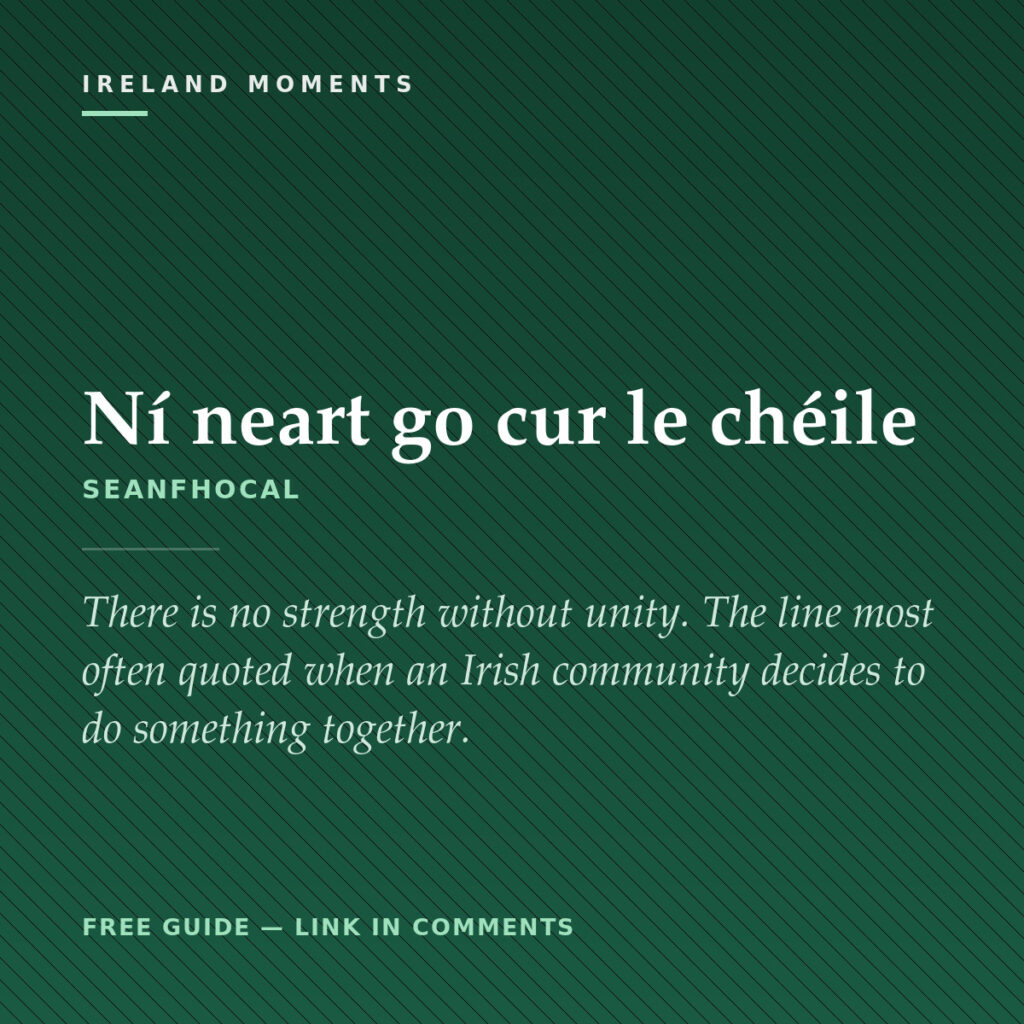
Set dancing endures because it’s built for community. Unlike solo performance traditions, a set requires cooperation. You rely on the couple across from you, the dancer beside you, and the caller guiding the room. Mistakes are common and forgiven. Beginners dance alongside veterans. Age, fitness, and experience matter far less than showing up.
It’s also deeply musical. Set dancers listen closely to the tune, matching their movements to the rhythm and phrasing. A good set dancer can tell you which tune the musicians are playing just by feel. The dance and the music are inseparable.
Today, set dancing classes run in nearly every county. Villages host weekly sessions in community centers. Festivals dedicated to sets draw hundreds of dancers. The Willie Clancy Summer School in County Clare includes set dancing workshops. Scoil Samhraidh Willie Clancy and the Sliabh Luachra Music Festival both feature late-night sets that go until dawn.
How to Join a Set
If you want to try set dancing, start with a beginners’ class. Most towns have weekly sessions, and teachers are welcoming. You don’t need a partner—dancers rotate throughout the evening. Wear comfortable shoes with smooth soles; sneakers work fine.
Expect to feel lost for the first few sessions. Set dancing has a learning curve, but the community is patient. Watch the experienced dancers, listen to the caller, and don’t be afraid to ask questions. Within a few weeks, the patterns start to click.
The best part? Set dancing is joyful. It’s exercise without feeling like work, tradition without stuffiness, and socializing built into every figure. It’s Ireland at its best: musical, welcoming, and entirely itself.
Love stories like this? Subscribe to the Ireland Moments newsletter for a daily celebration of Ireland’s music, culture, and the traditions that keep communities moving together.