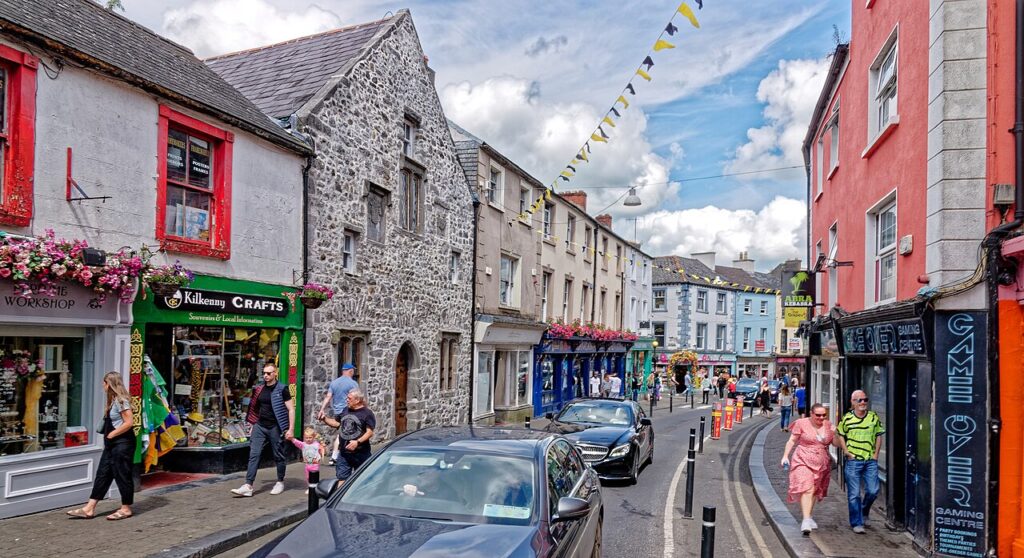
Kilkenny doesn’t just preserve its medieval past — it lives it. Walk down any laneway in this compact city and you’ll find stone archways, Tudor facades, and narrow passages that feel lifted from the 13th century. But Kilkenny isn’t frozen in time. It’s a thriving hub of craft, music, and food, where ancient walls shelter modern creativity and the pubs still pour pints the way they did generations ago.
Known as the Marble City for the distinctive black limestone quarried nearby, Kilkenny has been Ireland‘s cultural and commercial heart since the Middle Ages. Today it remains one of the country’s most rewarding places to explore — where every corner reveals a story, and every visit feels like coming home.
Kilkenny Castle and the River Nore
Kilkenny Castle dominates the city skyline, its gray stone towers rising above the River Nore. Built in 1195 by William Marshal, the castle served as the seat of the powerful Butler family for nearly 600 years. The Long Gallery alone is worth the visit — a stunning room lined with portraits, ornate ceilings, and Pre-Raphaelite murals that glow in the afternoon light.
The castle grounds are just as impressive. Fifty acres of parkland stretch along the river, perfect for a quiet walk or a picnic under old oaks. Cross the river at John’s Bridge and look back — the view of the castle reflected in the water is one of Ireland’s finest.
Entry to the castle costs around $10, but the grounds are free and open year-round. Go early in the morning or late in the afternoon to avoid the crowds and catch the light at its best.
Medieval Mile and St. Canice’s Cathedral
Kilkenny’s Medieval Mile runs from the castle to St. Canice’s Cathedral, tracing the route monks and merchants walked 800 years ago. Along the way you’ll pass the Rothe House, a beautifully preserved Tudor merchant’s home, and the Black Abbey, still in use by Dominican friars since 1225.
St. Canice’s Cathedral anchors the north end of the city. Built in the 13th century, it’s one of Ireland’s finest examples of Early English Gothic architecture. The round tower beside it is even older — climb the 100 steps to the top and you’ll be rewarded with sweeping views over the city and the surrounding countryside.
The cathedral is free to enter, though donations are welcomed. The round tower costs $5 to climb, and it’s worth every step.
Smithwick’s Brewery and Kilkenny’s Craft Scene
Kilkenny has been brewing beer since monks first settled here in the 6th century. Smithwick’s, Ireland’s oldest ale, was brewed on the site of St. Francis Abbey for over 300 years. The Smithwick’s Experience, housed in the original brewhouse, tells the story of the city’s brewing heritage through restored vaults, vintage equipment, and a perfectly poured pint at the end.
But Kilkenny’s craft scene goes far beyond beer. The city is home to the National Design and Craft Gallery, housed in the old castle stables, where you’ll find work by Ireland’s leading makers — ceramics, glasswork, jewelry, and textiles that reflect centuries of skill. The Kilkenny Design Centre on Castle Road showcases contemporary Irish crafts, and it’s the perfect place to find a piece to bring home.
The Smithwick’s Experience costs around $18 and includes a tasting. Book ahead during summer months.
Sessions, Storytelling, and Staying Awhile
Kilkenny’s pub culture rivals Galway’s and Cork’s. Kyteler’s Inn, dating to 1324, claims to be Ireland’s oldest — it’s named after Dame Alice Kyteler, accused of witchcraft and forced to flee the city in 1324. Today it serves hearty food and hosts trad sessions several nights a week.
Tynan’s Bridge House, with its horseshoe bar and original Victorian fittings, pours one of the best pints in Ireland. Matt the Millers and Cleere’s are staples for live music — expect everything from trad to indie rock, depending on the night.
Kilkenny also punches above its weight when it comes to food. Campagne on Gashouse Lane has held a Michelin star, while Foodworks on Parliament Street serves some of the county’s best farm-to-table fare. For something more casual, try Petronella for wood-fired pizza or Ristorante Rinuccini for Italian done the Irish way.
The city hosts several festivals throughout the year, including the Kilkenny Arts Festival in August and the Savour Kilkenny food festival in October. Both draw visitors from across Europe, but the city never feels overrun — it’s too rooted in itself for that.
Whether you’re tracing the Medieval Mile, climbing St. Canice’s tower, or settling in for a session at Tynan’s, Kilkenny offers something rare: a place where history, craft, and everyday life exist side by side, without pretense or compromise.
Love stories like this? Subscribe to the Ireland Moments newsletter — a daily celebration of Ireland delivered to your inbox every morning.