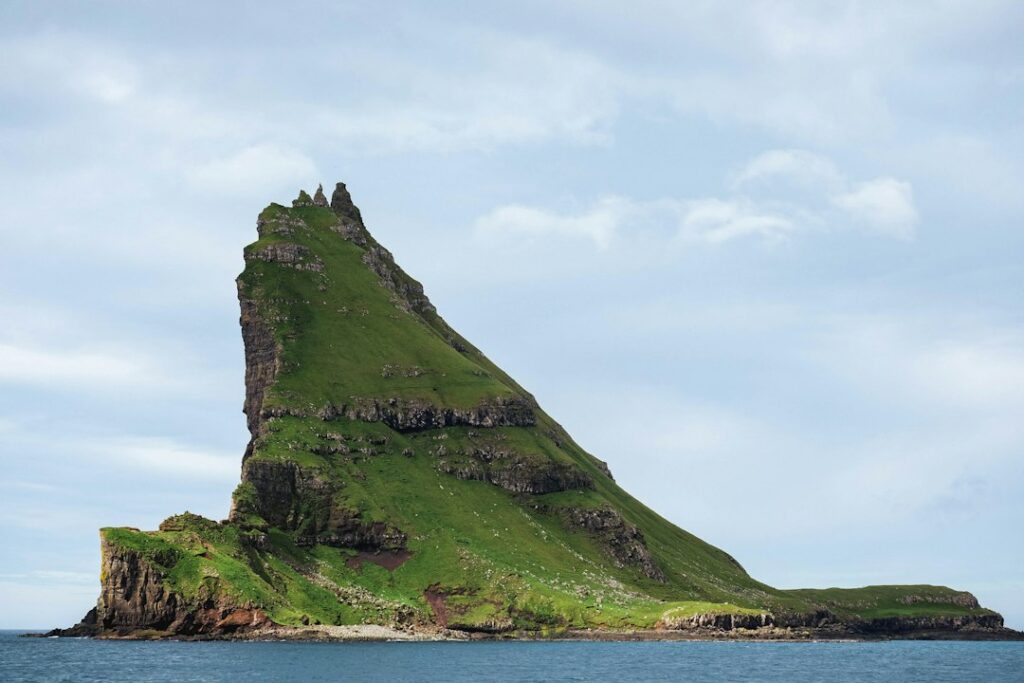
Eight miles off the coast of County Kerry, a jagged pyramid of rock erupts from the Atlantic Ocean with such dramatic force that it barely seems real. Skellig Michael—named after the archangel who cast down Satan—rises 714 feet above the churning sea, its twin peaks crowned by one of the world’s most improbable monasteries.
This is not a place that welcomes visitors easily. It never has been. And that’s exactly the point.
The Monastery at the Edge of the World
Sometime around the sixth century, a small group of monks rowed out to this inhospitable rock and decided to build a monastery. Not on gentle slopes or in sheltered valleys, but on terraces carved from sheer cliff faces, 600 feet above the waves. They constructed six beehive huts from unmortared stone, an oratory, two oratories actually, and carved more than 600 stone steps into the mountainside.
Why would anyone choose such a brutal location? The early Christian monks sought isolation from the world to grow closer to God. Skellig Michael offered isolation in abundance. Storms could—and still can—strand residents for weeks. Supplies had to be hauled up those endless stairs. Every moment was a test of faith and endurance.
Yet the monastery survived for roughly 600 years. Monks copied manuscripts, grew what little food the rocky soil allowed, and weathered Viking raids. When you stand in the ancient settlement today, surrounded by stonework that has survived more than a millennium of Atlantic gales, you understand something about human determination that no book can teach.
The Journey to Skellig Michael
Getting to Skellig Michael remains an adventure. Boats depart from Portmagee and Ballinskelligs between May and October, weather permitting. The crossing takes about an hour across open ocean—and those words “weather permitting” do serious work. Landings are canceled regularly when swells make the stone pier too dangerous to approach.
Only 180 visitors are allowed each day, spread across a handful of licensed boats. There are no facilities on the island, no shelter, no water fountain, and definitely no bathroom. You climb, you explore, you descend, and you leave. Tours typically allow about two and a half hours on the island, which sounds generous until you start climbing those steps.
Expect to pay around $100 for the boat trip. Book months in advance—spaces fill quickly, especially since a certain space opera filmed scenes here, transforming Skellig Michael into a pilgrimage site for an entirely different kind of seeker.
Stone Steps and Seabirds
The climb to the monastery is steep and relentless. The original medieval steps are worn smooth by centuries of feet and weather. Modern additions help, but you’re still ascending a near-vertical rock face with only a rope for safety in some sections. This is not a trip for anyone uncomfortable with heights or unsteady on their feet.
But the climb rewards. Puffins nest on Skellig Michael by the thousands between April and August, their colorful beaks and waddling walks providing comic relief between gasps for breath. Gannets wheel overhead, and if you’re lucky, you might spot a fulmar riding the updrafts along the cliffs.
At the top, the monastery opens before you like something from a dream. The beehive cells are perfectly intact, their stone walls fitted so precisely they’ve shed rain for 1,400 years. You can step inside these tiny chambers where monks once slept and prayed. The space is cramped, dark, surprisingly dry. The view from their doorways—nothing but ocean and sky—must have felt like dwelling at the threshold between earth and heaven.
The Star Wars Effect
When Luke Skywalker sought exile at the edge of the galaxy, filmmakers knew exactly where to find the perfect location. Skellig Michael’s appearances in recent Star Wars films introduced this ancient sanctuary to millions who’d never heard of County Kerry. The monastery doubled as a Jedi temple, which isn’t as much of a stretch as you might think—both traditions valued isolation, discipline, and seeking truth in harsh places.
The attention has been both blessing and curse. More people want to visit, but the island’s fragility demands strict limits. UNESCO monitors the site carefully. The monks who built here wanted to escape the world. Now the world wants very much to visit them.
Little Skellig’s Gannet City
Skellig Michael has a sister island. Little Skellig, just south, has no monastery, no steps, and no human residents. What it does have is roughly 70,000 gannets—one of the largest colonies in the world. Boats circle Little Skellig on the way to or from the main island, close enough to hear the cacophony and smell the distinctive perfume of a seabird colony.
The rock appears white from a distance, but as you approach, you realize the white is moving. Every surface writhes with birds. Gannets dive-bomb the water around the boat, plunging from dizzying heights in pursuit of fish. It’s nature at its most excessive and spectacular.
Planning Your Skellig Adventure
Book your boat trip as early as February or March for summer visits. Tour operators include Skellig Michael Cruises, Casey’s Skellig Islands Tours, and several others operating from Portmagee. Have backup dates—cancellations are common and refunds are given, but your schedule needs flexibility.
Wear layers. The weather eight miles offshore bears little resemblance to conditions on land. Bring water and snacks. Wear proper hiking boots with good grip—those medieval steps are no joke. If you’re prone to seasickness, take medication before boarding.
And if your landing gets canceled? Console yourself with the knowledge that you’re participating in an ancient tradition. The monks themselves were often stormbound, unable to leave or receive visitors for weeks. Some isolation you can only imagine. Some you might experience firsthand.
Want more stories from Ireland’s most remarkable places? Subscribe to the Ireland Moments newsletter for a daily celebration of the Emerald Isle—its landscapes, culture, history, and the tales that make it unforgettable.