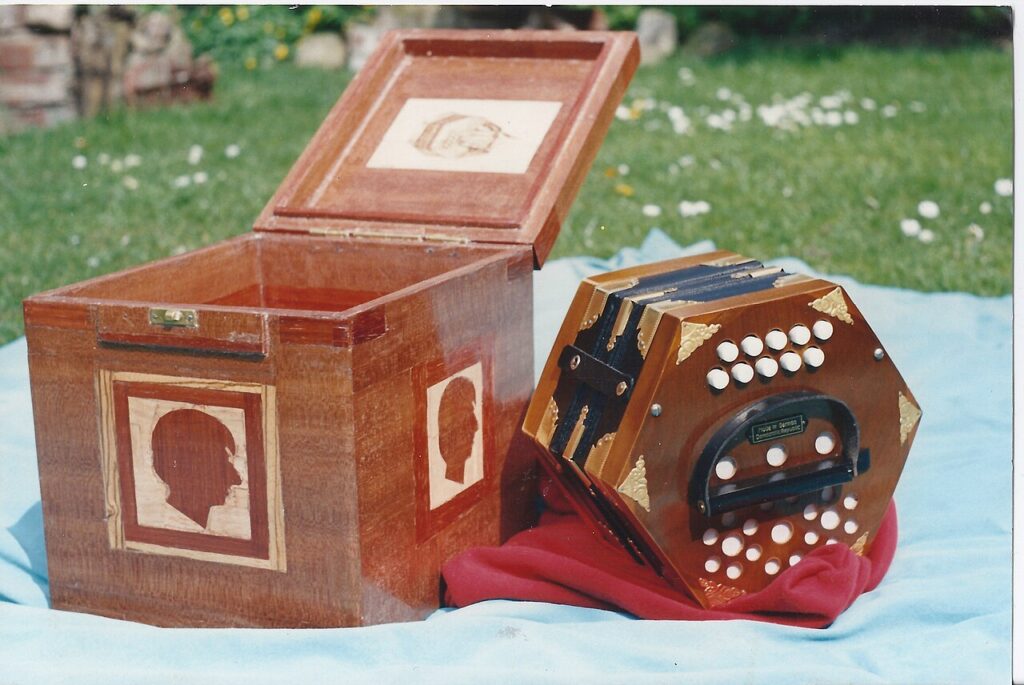
Walk into any pub in Doolin, Ennistymon, or Miltown Malbay on a Tuesday night, and you’ll hear it—the bright, rhythmic drive of the concertina cutting through fiddles and flutes. It’s a sound that’s become inseparable from County Clare itself, a voice that pushes dancers to their feet and keeps sessions rolling past midnight.
The Anglo concertina, with its hexagonal bellows and button keyboard, arrived in Ireland in the mid-1800s as an affordable import from England. But it was Clare musicians who claimed it, shaped it, and made it their own. Today, it’s as much a part of the county’s identity as the Burren’s limestone or the Atlantic’s relentless waves.
What Makes the Concertina Different
Unlike the accordion, which plays the same note whether you’re pushing or pulling the bellows, the Anglo concertina is bisonoric—each button produces a different note depending on the direction of the bellows. That push-pull rhythm mirrors the heartbeat of Irish dance music, giving reels and polkas their infectious bounce.
The instrument is small, portable, and loud enough to hold its own in a crowded session. Its staccato attack and bright tone make it perfect for the fast ornamentation and rhythmic drive that Clare-style playing demands. In the hands of a skilled player, the concertina doesn’t just accompany a tune—it propels it forward.
Masters like Mary MacNamara, Noel Hill, and the late Chris Droney shaped the Clare style: fast, ornamented, rhythmic, and utterly distinctive. Their playing is crisp and percussive, with triplets and rolls flying off the buttons like sparks from a forge.
The Heart of Clare’s Music Tradition
County Clare has been the epicenter of concertina playing for over a century. The instrument found fertile ground here, passed down through families and taught in kitchens long before formal music schools existed. The Willie Clancy Summer School in Miltown Malbay, held every July, is the world’s largest traditional music gathering, and concertina classes fill up within hours of registration opening.
Clare’s pub sessions are where the concertina truly shines. At Friel’s in Miltown Malbay or Vaughan’s in Kilfenora, you’ll find players young and old coaxing jigs and hornpipes from their instruments, the bellows flexing in perfect time. The concertina leads, pushes, and calls the tune—its voice unmistakable even in a room packed with musicians.
The instrument’s portability made it ideal for house dances and céilís. A player could tuck it under an arm, walk across a field, and have a full dance going within minutes. That practicality, combined with its power and clarity, made the concertina a fixture of rural Irish life.
Learning the Concertina Today
If you’re drawn to the concertina, Clare is still the place to learn. The Willie Clancy Summer School offers week-long courses for all levels, taught by some of Ireland’s finest players. Expect early morning classes, afternoon lectures, and night sessions that stretch until dawn.
For shorter stays, drop into sessions in Doolin or Ennistymon and watch how the instrument works within the group. Notice how the concertina player anchors the rhythm, how their ornamentation drives the tune forward, how the bellows become a second voice in the conversation.
A decent beginner Anglo concertina starts around $400 to $600, though serious players invest in custom-built instruments from makers like Edgley, Morse, or Dipper, which can run $3,000 or more. The investment is worth it—these instruments are built to last generations and improve with age.
Why It Still Matters
The concertina is more than a musical instrument in Clare—it’s a living connection to the past. Every reel played on a concertina today echoes the players who came before, the house dances in windswept cottages, the crossroads gatherings under summer skies.
In a world that moves too fast, the concertina asks you to slow down, listen, and feel the rhythm. It’s a reminder that the best music isn’t polished or perfect—it’s shared, lived, and passed on.
Want more stories celebrating Ireland’s music, places, and traditions? Subscribe to the Ireland Moments newsletter—a daily celebration of the Emerald Isle, delivered straight to your inbox.