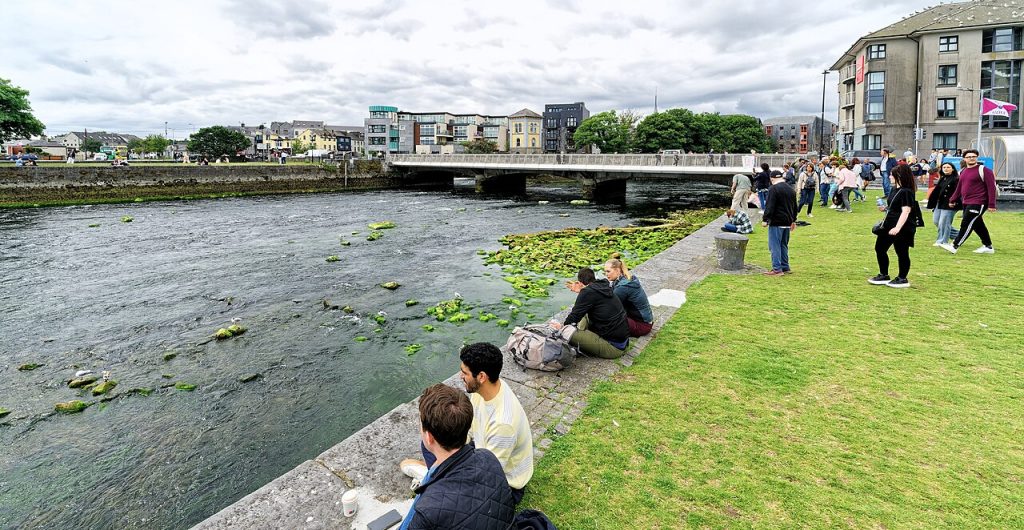
Galway earns its reputation as Ireland’s cultural heart not just through its music, art, and craic, but through the way it transforms with each season. While most visitors flock here in summer, those who return throughout the year discover a city that refuses to be just one thing—a place where the Atlantic weather, the festival calendar, and the rhythm of local life create four distinct experiences.
Spring: When the City Shakes Off Winter
March through May brings Galway back to life after the quiet winter months. The Cuirt International Festival of Literature in April fills pubs and venues with readings, workshops, and conversations that spill onto the cobblestones of Shop Street and Quay Street. You’ll find award-winning authors sharing pints with local poets in Tig Coili or The Quays.
This is the season to explore Connemara without the crowds. The hills turn impossibly green, and you can hike the trails around Kylemore Abbey or drive the Sky Road loop outside Clifden with only the sheep for company. Back in the city, the Saturday market at St. Nicholas’ Collegiate Church expands with spring vegetables, artisan cheeses from farms in Clare and Galway, and the first of the season’s smoked salmon.
Accommodation rates drop significantly compared to summer—expect to pay $120 to $180 for a good city-center hotel versus $250 to $350 in July.
Summer: Festival Season in Full Swing
June through August is when Galway earns its title as Ireland’s festival capital. The Galway International Arts Festival in July transforms the entire city into a performance space, with theater, music, visual art, and street performers creating a carnival atmosphere that runs day and night. Follow it immediately with the Galway Races in late July and early August, when the entire country seems to descend on Ballybrit Racecourse dressed to the nines.
Summer means long evenings—sunset doesn’t arrive until after 10 p.m.—perfect for walking the Salthill Promenade, where locals still observe the tradition of kicking the wall at Blackrock diving tower before turning back. The beaches at Silverstrand and Dog’s Bay in Connemara warm enough for swimming, though “warm” is relative in the Atlantic.
Trad sessions happen nightly at Tigh Neachtain, Monroe’s Tavern, and The Crane Bar, but arrive early. These rooms fill quickly with both locals and visitors, and the best sessions start around 9 p.m.
Autumn: Oysters, Storms, and Smaller Crowds
September through November might be Galway’s best-kept secret. The Galway International Oyster and Seafood Festival in late September celebrates the opening of oyster season with competitions, tastings, and enough Guinness to float a currach. You’ll taste oysters pulled from the beds of Clarinbridge and Kilcolgan that morning, served with brown bread and Irish butter.
October brings dramatic Atlantic storms that make storm-watching from the Spanish Arch or out at the Cliffs of Moher a spectator sport. The light turns golden and low, perfect for photography, and the tourists thin out considerably. You can actually get a table at Ard Bia at Nimmos or McDonagh’s fish and chips without a wait.
This is also when the traditional music scene returns to its roots. Without the summer crowds, sessions become more intimate, more focused. The musicians play for each other and the regulars, and if you’re respectful and quiet, you’re welcome to pull up a stool and listen.
Winter: Intimate, Atmospheric, and Authentically Local
December through February reveals Galway at its most authentic. Yes, it rains. Yes, it’s dark by 4:30 p.m. But the pubs glow warmer, the fires burn hotter, and the city belongs to the people who live here. The Christmas market on Eyre Square in December brings mulled wine, local crafts, and enough festive atmosphere to warm the coldest evening.
Winter is for long lunches at Kai or The Pie Maker, for browsing Charlie Byrne’s Bookshop on Middle Street without anyone rushing you, for watching the Atlantic hurl itself against the seawall at Salthill. Hotel rates drop to $90 to $140 a night, and restaurants that require reservations weeks ahead in summer welcome walk-ins.
The music remains constant. Galway’s musicians don’t take winter off. If anything, the sessions intensify, as if the city draws inward, concentrating its energy. You’ll find some of the finest traditional players in Ireland at The Crane Bar’s upstairs session on Tuesdays and Sundays, playing for the love of it.
Want more stories about Ireland’s cities, landscapes, and traditions delivered to your inbox? Subscribe to the Ireland Moments newsletter—a daily celebration of the Emerald Isle, wherever you are.