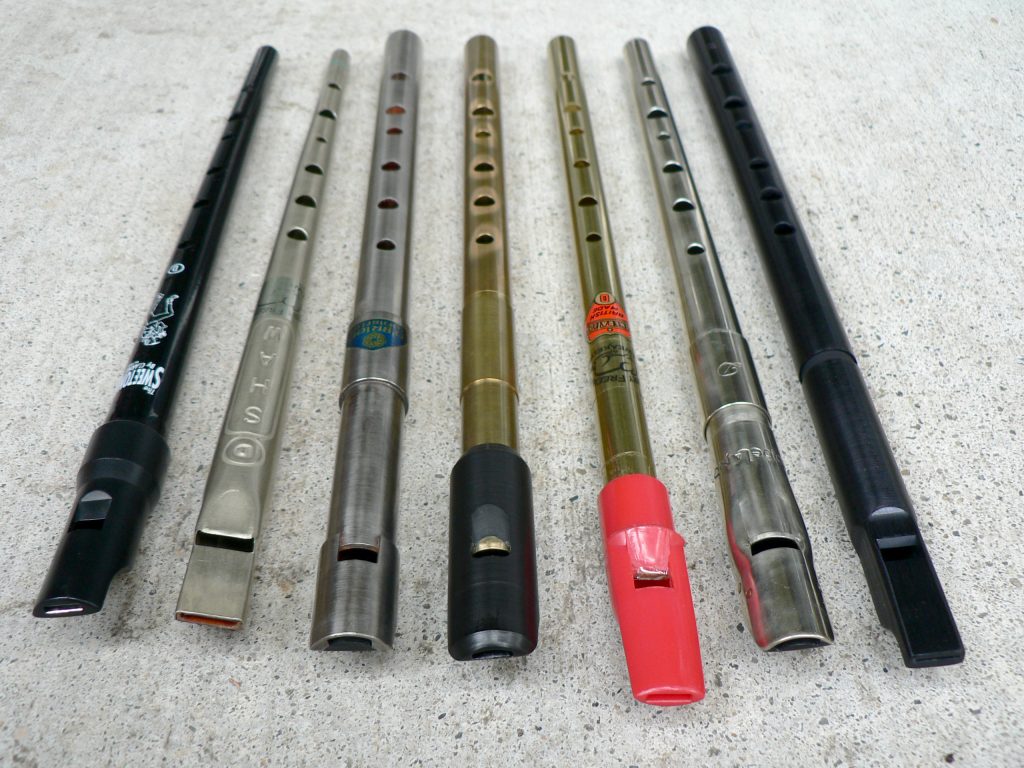
Walk into any music shop in Ireland and you’ll find them hanging near the counter: tin whistles in every key, some painted bright green for tourists, others plain nickel or brass for serious players. At around $10 to $30, they’re the most accessible entry point into Irish traditional music. But don’t let the price fool you—in the right hands, a tin whistle can carry a melody that makes a whole session go quiet.
The tin whistle, also called the penny whistle or feadóg stáin in Irish, is a six-holed woodwind instrument with a fipple mouthpiece. It’s been part of Ireland’s musical landscape for well over a century, though simple flutes and whistles have existed in Irish music for much longer. What makes the modern tin whistle special isn’t just its sound—it’s how it democratized access to traditional music.
Why the Whistle Became Ireland’s Learning Instrument
In the early 20th century, when Robert Clarke began mass-producing tin whistles in Manchester and later in Suffolk, they became affordable enough for every household. Irish families embraced them. Children learned their first jigs and reels on whistles before graduating to fiddles, flutes, or pipes. The whistle required no expensive maintenance, no reeds to fuss with, and could survive being dropped, stepped on, or left out in the rain.
That accessibility created generations of musicians. Mary Bergin, one of Ireland’s most celebrated whistle players, started on a Clarke tin whistle as a child in Dublin. Paddy Moloney of The Chieftains began the same way. So did countless session players who now hold down the melody in pubs from Dingle to Donegal.
The whistle’s simplicity is deceptive. Yes, you can learn “Twinkle, Twinkle” in an afternoon. But mastering the ornamentation that defines Irish traditional music—the cuts, rolls, slides, and cranns—takes years. A skilled player can make a $15 whistle sing with as much soul as any concert flute.
The Sound That Cuts Through
In a session, the tin whistle occupies a unique sonic space. It’s higher and brighter than the wooden flute, clearer than the uilleann pipes, and more penetrating than the fiddle. That brightness means it can carry the melody even when a dozen instruments are playing. Listen to recordings from the Bothy Band or Planxty and you’ll hear how Paddy Keenan or Matt Molloy’s whistles cut through the mix without ever overwhelming it.
The most common whistle is pitched in D, which suits the majority of Irish tunes. But serious players own whistles in C, B-flat, and other keys to accommodate different sessions and tune sets. High-end whistles from makers like Michael Burke, Copeland, or Susato can run $100 to $300 and offer better intonation, richer tone, and more responsive play—though many traditional players still swear by their battered old Clarkes.
Where to Hear It Done Right
If you want to hear the tin whistle at its finest, head to County Clare. The town of Miltown Malbay hosts the Willie Clancy Summer School every July, where whistle workshops draw players from around the world. Drop into any session at Friel’s or Linnane’s Bar in nearby Spanish Point, and you’ll likely hear a whistle leading a set of reels with precision and fire.
In Dublin, sessions at The Cobblestone or Hughes’ Bar often feature strong whistle players. Galway’s Crane Bar and Tig Coili are also reliable spots. The beauty of the whistle in a session is its generosity—it can lead, follow, or weave harmonies around other instruments, adapting to whatever the music needs.
For recorded whistle music, start with Mary Bergin’s Feadóga Stáin albums or Joanie Madden’s work with Cherish the Ladies. You’ll hear the full range of what the instrument can do: fast, ornamented dance tunes, slow airs that pull at the heart, and everything in between.
Learning the Whistle Today
One reason the tin whistle endures is how teachable it remains. Hundreds of online tutorials, instruction books like The Essential Guide to Irish Flute and Tin Whistle by Grey Larsen, and local workshops make it easier than ever to start. Many Irish cultural centers in the U.S., Canada, and Australia offer beginner whistle classes, often aimed at kids but welcoming to adults.
The fingering is intuitive. Cover all six holes and you get the lowest note of the scale; lift your fingers one by one and you ascend. Half-holing and breath control add the sharps, flats, and second octave. Within a few weeks, most learners can play simple tunes. Within a few months, they’re ready to sit in on a slow session.
What keeps players coming back is the whistle’s expressiveness. A slight change in breath pressure, a quick finger tap, a bent note—these tiny adjustments give each player a distinct voice. The whistle may be simple, but it’s never plain.
If you’ve ever been curious about Irish traditional music, the tin whistle is your invitation. Pick one up, learn a reel or two, and you’ll understand why this humble instrument has launched so many musical journeys across Ireland and beyond.
Want more stories celebrating Ireland’s music, culture, and traditions? Subscribe to the Ireland Moments newsletter—a daily celebration of the Emerald Isle, delivered to your inbox.