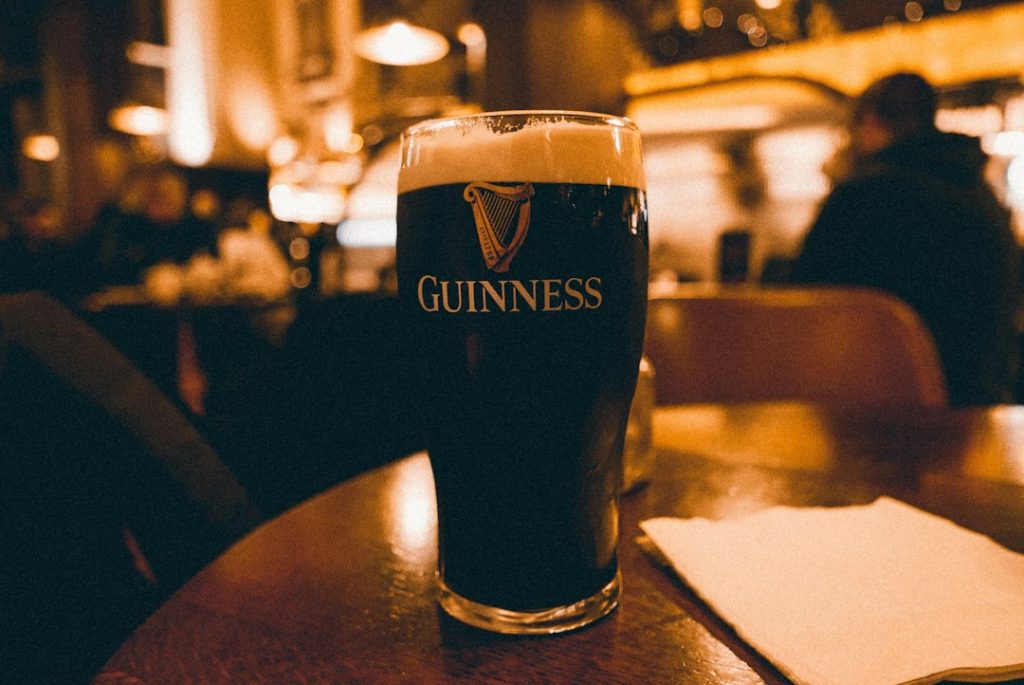
Ask anyone who’s traveled to Ireland and they’ll tell you the same thing: Guinness tastes different here. Richer. Creamier. More alive. It’s one of those experiences that defies explanation until you wrap your hands around a proper pint in a Dublin pub and realize the difference is undeniable.
The question is why. Is it the water? The distance from the brewery? The way it’s poured? Or is it all in your head, sweetened by the moment and the company?
The answer is all of the above—and none of them alone.
Freshness and Turnover
The single biggest reason Guinness tastes better in Ireland is volume. Irish pubs move through kegs at a rate that most bars around the world can’t match. At a busy Dublin pub like The Gravediggers in Glasnevin or Kehoe’s on South Anne Street, a keg of Guinness might last hours, not days. That means what you’re drinking is as fresh as draft beer gets.
Guinness is a living product. It’s best consumed within weeks of packaging, and even better within days of tapping. In Ireland, high turnover ensures you’re getting it at peak flavor. Abroad, where demand is lower, kegs sit longer. Lines get stale. The beer oxidizes. The signature roasted bitterness turns flat and metallic.
Freshness isn’t romantic, but it’s everything.
The Pour Matters More Than You Think
Every bartender in Ireland learns the two-part pour. It’s not theater—it’s technique. The glass is tilted at 45 degrees, filled three-quarters full, then allowed to settle for exactly 119.5 seconds. Then it’s topped off to create that perfect dome of cream.
When done right, the result is a pint with a dense, velvety head and a smooth, nitrogen-rich body. The settling process allows the bubbles to cascade and the nitrogen to distribute evenly, giving Guinness its iconic mouthfeel.
Outside Ireland, bartenders often skip the settle. They top it off too soon. They use the wrong glass. They don’t clean the lines often enough. Small mistakes compound, and what should be a creamy, bittersweet experience becomes thin and gassy.
In Ireland, the pour is a point of pride. Pubs train their staff. Regulars will call out a bad pint. The culture enforces the standard.
Temperature and Equipment
Guinness is served colder in the United States—around 38°F—because American drinkers expect ice-cold beer. In Ireland, it’s poured at 42 to 44°F, which allows the malt and roasted barley flavors to open up. That few degrees makes a noticeable difference in taste and aroma.
Irish pubs also maintain their draft systems religiously. Lines are cleaned weekly. Gas mixes are calibrated. Glasses are dedicated and rinsed with cold water, never put through a hot dishwasher with detergent residue that kills the head.
These aren’t luxuries. They’re baseline expectations in a country where Guinness is cultural infrastructure.
The Placebo of Place
There’s also something less tangible at work. Drinking Guinness in Ireland—whether it’s in a snug in Galway, a corner booth in Cork, or at the bar in a village pub in County Clare—changes the experience. The context matters. The ritual matters. The fact that you’re drinking it where it was born, surrounded by people for whom it’s not exotic but ordinary, adds weight.
That’s not placebo. That’s phenomenology. A pint of Guinness in its native habitat tastes like belonging.
What About the Guinness Storehouse?
The Gravity Bar at the top of the Guinness Storehouse in Dublin offers a free pint with admission and a 360-degree view of the city. The beer is impeccable—served steps from where it’s brewed—but the experience is more tourist attraction than trad pub. If you want the quintessential Guinness moment, skip the Storehouse and head to a working pub where locals drink daily.
Try Grogan’s on South William Street, John Mulligan’s on Poolbeg Street, or The Long Hall on George’s Street. These are places where Guinness isn’t a novelty. It’s the standard.
Can You Replicate It at Home?
Not really. Guinness sells widget cans designed to mimic the nitrogen pour, and they’re remarkably good for packaged beer. But they’re not the same as a fresh keg poured by someone who’s done it ten thousand times.
The best you can do outside Ireland is find a pub with high turnover, a bartender who respects the pour, and clean lines. Even then, you’re chasing an echo.
Or you can book a flight.
If you love stories like this—celebrating the craft, culture, and soul of Ireland—subscribe to the Ireland Moments newsletter. Every day, we bring you a little piece of the Emerald Isle, from the pubs to the hills to the traditions that make it unforgettable.