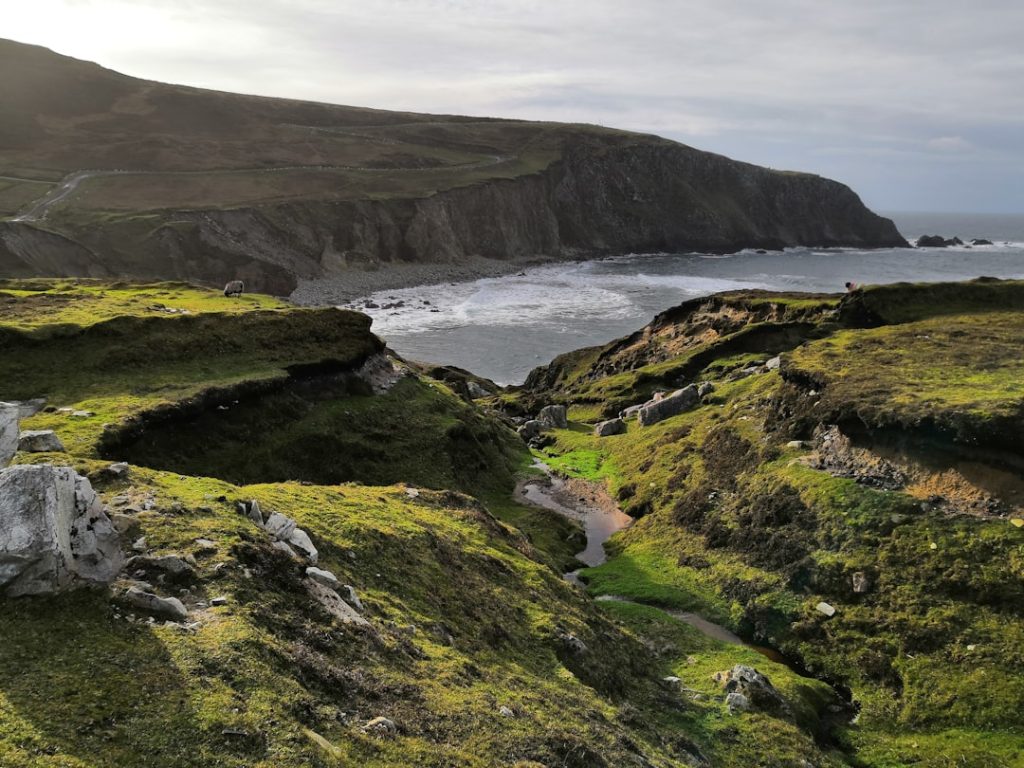
Stretching 1,600 miles from Kinsale in County Cork to Malin Head in Donegal, the Wild Atlantic Way isn’t just a scenic drive—it’s a collection of experiences that define Ireland’s western edge. This is where the Atlantic meets ancient cliffs, where islands hold onto old traditions, and where small coastal villages offer some of the country’s most memorable moments.
Here are seven experiences that capture what makes this route truly unforgettable.
Storm-Watching at the Cliffs of Moher
Winter storms along the Clare coast turn the Cliffs of Moher into a theater of natural power. From October through March, Atlantic swells send spray shooting hundreds of feet into the air, and the visitor center offers protected viewing platforms where you can watch waves explode against 700-foot cliffs.
The best storm-watching happens during westerly gales—check the forecast and arrive early for parking. Local guides recommend the coastal walk from Doolin to the cliffs for a less-crowded perspective, though you’ll want proper rain gear and sturdy boots.
Kayaking Through the Marble Arch Sea Caves
Just off Connemara’s Bertraghboy Bay, guided kayak tours take you into sea caves carved from white marble. The water here glows turquoise in summer light, and you’ll paddle beneath arches sculpted over millennia by Atlantic tides.
Sceirde Seakayaking in Roundstone runs tours from May through September, suitable for beginners. Expect to pay around $55 per person for a three-hour trip that includes instruction and all equipment. Seals often follow the kayaks, curious about the visitors to their territory.
Taking the Ferry to the Aran Islands
The three Aran Islands—Inis Mór, Inis Meáin, and Inis Oírr—sit nine miles off the Galway coast, where Irish is still the daily language and stone walls map out centuries of farming. Ferries run year-round from Rossaveal and Doolin, with the crossing taking 40 minutes to an hour depending on conditions.
On Inis Mór, rent a bike and cycle to Dún Aonghasa, a prehistoric fort perched on 300-foot cliffs with no barriers between you and the edge. The smaller islands offer quieter exploration—Inis Meáin has traditional thatched cottages and the chair where playwright J.M. Synge wrote much of his work.
Surfing at Lahinch Beach
County Clare’s Lahinch has been Ireland’s surf capital since the 1960s, when Californian surfers discovered its consistent Atlantic swells. The beach break works for all levels, with surf schools offering lessons year-round and wetsuit rentals starting around $25 per day.
Lahinch Surf School runs beginner sessions for about $45, including board and wetsuit. Winter brings the biggest waves—experienced surfers head to nearby Aileen’s, a left-hand reef break beneath the Cliffs of Moher that’s considered one of Europe’s heaviest waves.
Walking the Sky Road in Clifden
This seven-mile loop west of Clifden climbs above Connemara’s coast, offering views across islands, inlets, and the Twelve Bens mountain range. The road narrows to a single lane in places, with passing points overlooking the Atlantic.
Start in Clifden and drive or cycle clockwise—the route takes about 30 minutes by car, two hours by bike, or three hours on foot. Stop at the ruins of Clifden Castle, hidden in woodland halfway around, where Ireland’s landed gentry once surveyed their estates before the Famine changed everything.
Sampling Oysters in Clarinbridge
Galway Bay’s oysters have fed locals for thousands of years, and the village of Clarinbridge remains the place to taste them fresh from the water. Paddy Burke’s Oyster Inn, established in 1775, serves them by the half-dozen with brown bread and lemon—nothing else needed.
The oyster season runs from September through April when the water’s cold. Expect to pay around $18 for six native oysters, smaller and more mineral than Pacific varieties. If you visit during the Galway International Oyster Festival in late September, you’ll find shucking competitions and tasting tents throughout the city.
Watching Sunset from Slea Head
The westernmost point of the Dingle Peninsula offers sunset views across the Blasket Islands, abandoned in 1953 but visible just offshore. The narrow road curves around the headland, with pull-offs where you can park and watch the light change across the Atlantic.
Summer sunsets happen after 10 p.m., painting the Blaskets in orange and pink before sinking into the ocean. The small village of Dunquin sits just above the pier where islanders once rowed to the mainland—on clear days, you can take a boat trip to Great Blasket to explore the ruined village and walk the island’s grassy spine.
These seven experiences barely scratch the surface of what the Wild Atlantic Way offers, but they represent the range—from quiet contemplation to physical adventure, from ancient history to living tradition. Each bend in the coastal road reveals something new.
Want more stories from Ireland’s coast, mountains, and hidden corners? Subscribe to the Ireland Moments newsletter—a daily celebration of Ireland delivered to your inbox each morning.