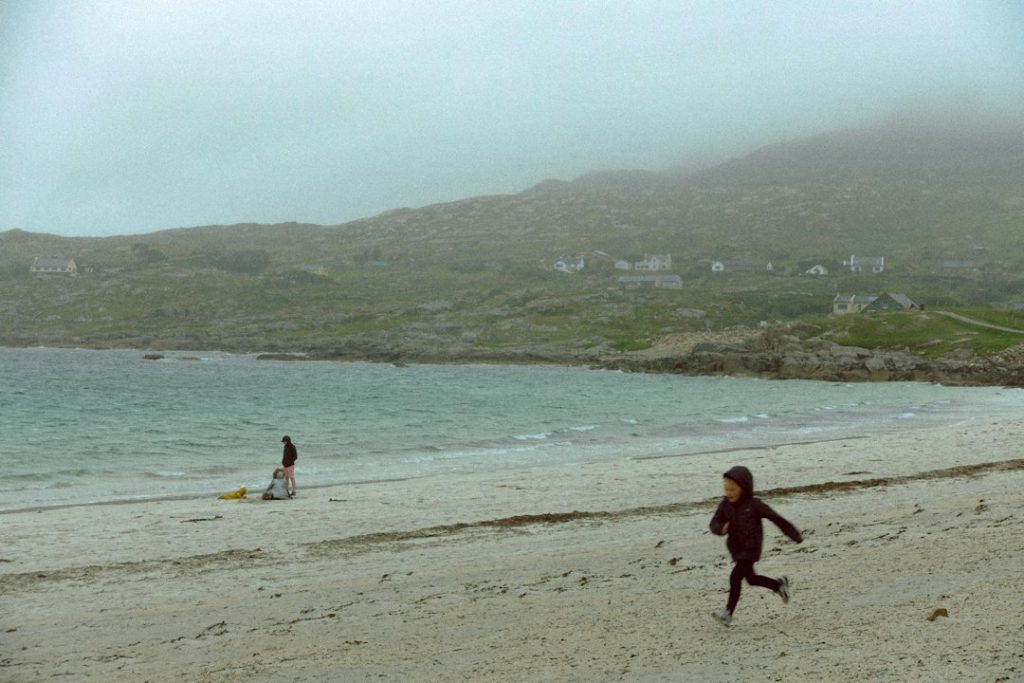
In the rich tapestry of Irish mythology, few stories resonate as deeply as the tale of the Children of Lir. This ancient legend, one of the Three Sorrows of Storytelling, tells of four royal children transformed into swans by their jealous stepmother and condemned to spend 900 years wandering Ireland’s waters. It’s a story that captures the Irish soul—beautiful, tragic, and ultimately redemptive.
The Curse That Lasted Nine Centuries
The story begins with Lir, a chieftain of the Tuatha Dé Danann, and his four beloved children: Fionnuala, Aodh, Fiachra, and Conn. After their mother’s death, Lir married her sister Aoife, who grew increasingly jealous of the love Lir showed his children. In a moment of dark magic, Aoife struck the children with a druid’s wand, transforming them into swans while leaving their human voices and hearts intact.
The curse specified three periods of 300 years each: the first on Lough Derravaragh in County Westmeath, the second in the Sea of Moyle between Ireland and Scotland, and the third on the waters of Irrus Domnann off the coast of Mayo. Through it all, the children retained their ability to sing, and their melancholic songs became legendary across the land.
Where the Legend Lives Today
Lough Derravaragh, near Mullingar in County Westmeath, remains the most accessible site connected to the legend. The peaceful lake, surrounded by rolling farmland and wooded shores, is where the children spent their first 300 years. Locals still speak of the swans here with a certain reverence, and a statue commemorating the Children of Lir stands in the Garden of Remembrance in Dublin, where sculptor Oisín Kelly captured Fionnuala sheltering her younger brothers beneath her wings.
The Sea of Moyle—the strait between County Antrim and Scotland—was their harshest exile. Buffeted by storms and icy waters, separated at times by violent weather, the children endured their most difficult centuries here. Today, the coast near Ballycastle offers views across these same waters, still wild and unforgiving.
Their final 300 years were spent around Inishglora, a small island off the Mayo coast near Belmullet. This remote location, with its ancient monastic ruins, carries an atmosphere of solitude that echoes the swans’ long exile.
The Power of the Story
What makes the Children of Lir so enduring is its emotional complexity. Unlike many fairy tales, there’s no simple villain to defeat or quick resolution. The children’s suffering is profound and prolonged, yet they maintain their dignity, their love for each other, and their beautiful voices. Fionnuala, the eldest, becomes a protective figure—maternal and strong—watching over her brothers through centuries of hardship.
The story also captures the Irish experience of diaspora and displacement. The children are exiled from their home, unable to return to human form or their father’s house, wandering Ireland’s edges for centuries. This theme of separation, longing, and endurance resonates deeply with Irish history and the millions who left Irish shores over the centuries.
The Ending and Its Meaning
When the 900 years finally end, the children are transformed back to human form—but as ancient, withered beings who have lived far beyond natural years. A monk baptizes them before they die, and they’re buried together in one grave. It’s not a happy ending in the conventional sense, but it offers something perhaps more meaningful: release, reunion, and peace after long suffering.
The tale reminds us that some wounds take generations to heal, that beauty can exist alongside sorrow, and that love and family bonds can endure even the cruelest transformations. In Irish pubs and around firesides, at storytelling festivals and in children’s books, the Children of Lir continue to move new generations with their haunting song.
The legend lives on in place names, in the swans that still grace Irish lakes and rivers, and in the collective memory of a people who understand that the most powerful stories don’t always promise easy resolutions—they promise truth.
Want more stories from Ireland’s ancient past and vibrant present? Subscribe to the Ireland Moments newsletter for a daily celebration of the Emerald Isle—delivered straight to your inbox each morning.